
 Wildlife
of the Philippines
Dugong
Whales, Dolphins & Dugong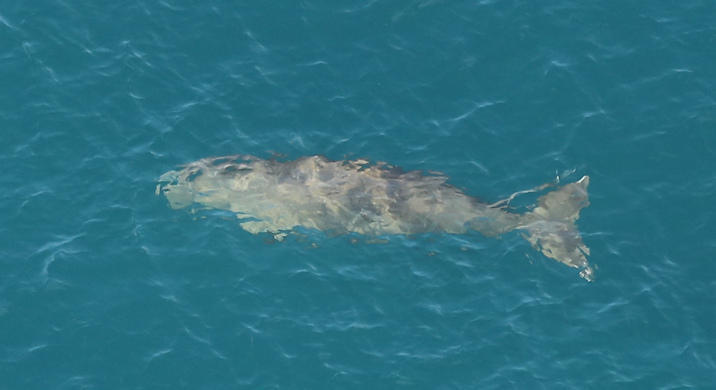
Photo: (c) Wynand Uys, some rights reserved (CC BY) · CC BY 4.0
Dugong dugon
Philippine national list: Critically Endangered (CR)
Basic stats
Diet
Seagrass, almost entirely
Habitat
Shallow coastal water with seagrass: bays, mangrove channels, lagoons and the waters of inshore islands
Range
Indo-West Pacific coasts of about 40 countries; in the Philippines isolated populations, notably in the Calamian Islands, Isabela, Guimaras and Mindanao
Litter size
1 calf
Gestation period
About 13 months (372–374 days)
Size
Adults average about 3.3m (COMBINE, Soria et al. 2021)
Weight
About 360kg on average (COMBINE, Soria et al. 2021)
The dugong is one of four living sirenians, a group that includes the manatees, and the only one found in the Indo-West Pacific. Its body is cylindrical and tapers at both ends, with no dorsal fin or hind limbs, and paddle-like flippers without nails. The dolphin-like, fluked tail separates it from manatees. The snout points sharply downwards for feeding on seagrass, and the large upper lip is horseshoe-shaped and very mobile. The skin is pale cream at birth and darkens to brownish or dark grey with age. The eyes are tiny and there are no external ears (Wikipedia, general species account).
A dugong grazes seagrass meadows and so lives only where they grow. It is long-lived, reaching 70 years or more, and breeds slowly: a female bears one calf after a gestation of about a year. The English name came from French naturalists in the 1700s who described animals from Leyte. In several Philippine languages the word for dugong is also the word for mermaid, and in parts of the Philippines it is thought unlucky if one dies in a net or fish corral (Wikipedia, citing published sources).
All the islands of the Philippines once had sizeable herds. Today only isolated populations remain, most notably in the Calamian Islands of Palawan, at Isabela in Luzon, at Guimaras and in Mindanao. It was the first marine mammal protected by Philippine law, but monitoring is difficult. Dugongs are shy and sightings are a matter of luck: on this guide, look for them from boats around the Palawan islands (Wikipedia, citing published sources).
Quick answers
- What does the Dugong eat?
- Seagrass, almost entirely
- What habitat does the Dugong live in?
- Shallow coastal water with seagrass: bays, mangrove channels, lagoons and the waters of inshore islands
- Where is the Dugong found?
- Indo-West Pacific coasts of about 40 countries; in the Philippines isolated populations, notably in the Calamian Islands, Isabela, Guimaras and Mindanao
- What is the litter size of the Dugong?
- 1 calf
- How long is the gestation period of the Dugong?
- About 13 months (372–374 days)
- How big is the Dugong?
- Adults average about 3.3m (COMBINE, Soria et al. 2021)
- How much does the Dugong weigh?
- About 360kg on average (COMBINE, Soria et al. 2021)